A vintage is not a product.
It is what a season
made possible.
The winemaker does not choose the year. They work with what the season gives them — the rain, the heat, the particular quality of light across the slopes in March. Then they close the cellar.
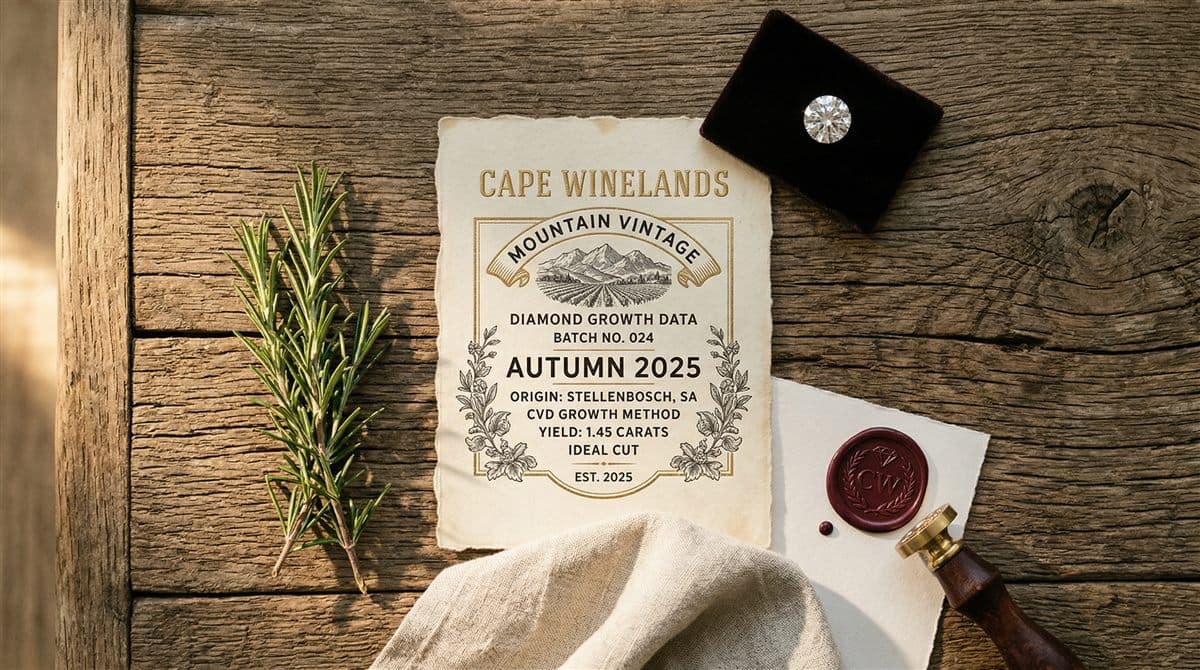
We apply the same discipline. Each Vintage collection is drawn from a single sourcing window. When we have selected what the season allows — forty stones, or sixty, or twenty-three — the selection closes. There is no restocking. The next release is the next season.
Mountain Vintage opens in spring, when clarity is sharpest. Coast Vintage arrives in summer, with the long light. The Estate Selection holds the standing collection — what the seasons leave behind.
Each stone catches different light
at different latitudes.
A diamond chosen for the Mountain Vintage is not the same as one that belongs to the Coast. The sourcing window changes. The light changes. The selection responds. That is what a vintage means.
Numbered
Every stone in a vintage is numbered in sequence. Its position in the release is part of its record.
Certified
Every stone graded by GIA, IGI, or HRD. The certificate travels with the stone.
From vines to stones.
The same calendar.
Simon van der Stel plants the first vines at Constantia. The winelands take their shape.
The Cape vintage calendar becomes the rhythm the region is known for worldwide.
The wine vintage system — one release per year — becomes accepted global practice.
The Vintage is conceived: diamond releases modelled on the wine vintage calendar.
First Mountain Vintage selection. Sourced, graded, numbered. Twenty-seven stones.
Two seasonal releases and a standing Estate Selection. The terroir of light, made legible.
The collection is open.
This season’s selection closes when the last stone is reserved.
Shop Diamonds